Plumbing · Wembley, London
Boiler & Hot Water Repair in Wembley, London
Heating and hot-water faults in Wembley fall cleanly on either side of a line running through the borough's housing. In the Wembley Park towers — Quintain's build-to-rent core of more than seven thousand flats — heat and hot water rarely come from a boiler at all: a single district-heating network feeds a heat interface unit in each flat off shared plant. A short walk out, the Metro-land semis of Sudbury and North Wembley run the familiar thing, an individual combi or a system boiler and cylinder that is yours alone to keep going. The Honest Plumber Wembley works both, and the opening question on the phone is simply which world you are ringing from.
One thing runs beneath the whole borough regardless: the water is Affinity's, not Thames Water's, and Affinity classes it hard. The local supply zone, AF062 treated at Wembley Treatment Works, sits at about 295 mg/l calcium carbonate, and that calcium steadily furs heat exchangers, cylinders, immersion elements and even the compact plate exchanger inside a heat interface unit. A system losing pressure, cutting out under load or running only lukewarm is far more often a scale story than a failed-part story, and working out which is the entire point of the visit.
We started the firm in 2008, and eighteen years on this patch means the pattern is well worn — one hard supply wearing a fresh symptom in every kind of Wembley home. Anything gas-adjacent is carried out to the Gas Safety (Installation and Use) Regulations 1998, the standard that governs how the work is done rather than any badge on the casing, and the diagnosis always comes before a part is ordered.
A boiler or an HIU that has gone out altogether, with no heat or hot water at all, is treated as a same-day priority. Ring 07861 957001 and we get someone reading what is genuinely wrong before anyone leaps to a full replacement.
What We Do
Which System Is Behind the Cold Tap
Almost every fault comes down to scale, a failed component, or the shared plant behind a flat — so the diagnosis names the cause before any part is swapped.
Heat Interface Units and District Heating in the Quintain Towers
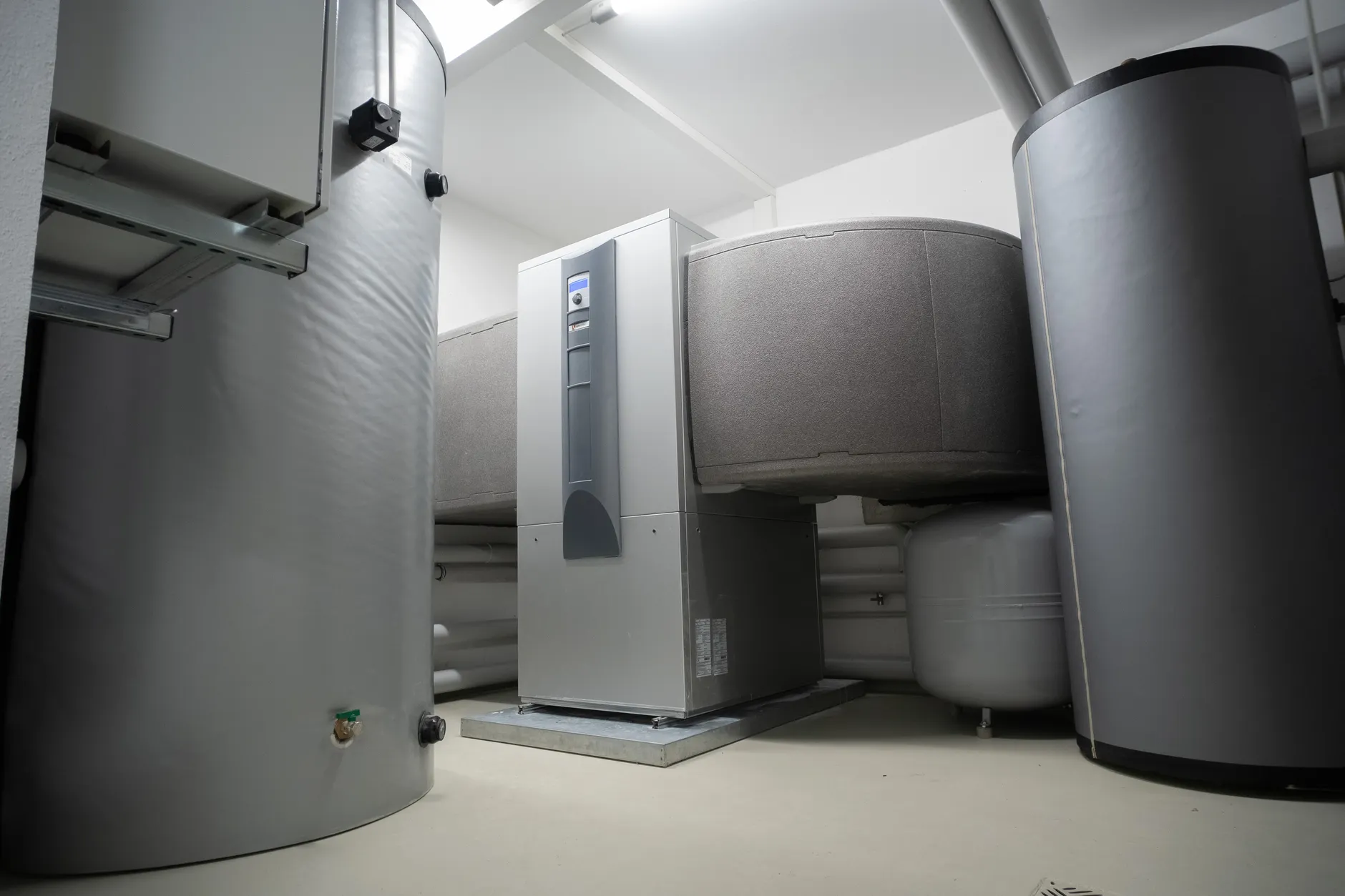
Most of Wembley Park's build-to-rent core takes its heat from one large district-heating network — an energy centre feeding sub-stations across the estate — with an unvented, pressurised heat interface unit in each flat rather than a boiler. When the heat or hot water drops here, the fault can sit in the HIU's plate exchanger, a control valve, or the plant upstream, and Affinity's scale furs those compact exchangers just as readily as it furs a cylinder.
Because the network runs under a long concession and the block under a managing agent, we establish who owns which part of the system before the work is scoped.
Combis and System Boilers in the Metro-land Semis
A boiler that has lost pressure, thrown a fault code or gone out is read on site before anything is changed, because a scaled heat exchanger and a failed pressure sensor look alike from the outside but need very different remedies. Sudbury's and North Wembley's interwar houses carry the full range — older system boilers feeding a separate cylinder, and newer combis dropped into the same stock.
A clean repair — a new valve, a re-pressurised expansion vessel, a cleared airlock — is usually sorted the same day once the cause is confirmed.
Clearing Affinity's Scale From the Whole System
A power flush pushes high-velocity water and cleaning chemicals through the entire system at once — radiators, pipework and exchanger together — shifting the scale and sludge a routine service never reaches. On a supply as hard as Affinity's it is the fix that treats the actual build-up, rather than replacing whatever component the sludge is currently choking.
It earns its place where radiators stay cold along the bottom, the system knocks and gurgles despite servicing, or a boiler keeps shedding efficiency for no single obvious reason.
The Benefits
Reading the Fault Before Reaching for a Part
Hard water is the one constant across every district, so a repair that steps around the scale tends to come back inside a year in a new disguise.
A Written Figure After the Fault, Not Before
The quote lands once the fault is confirmed on site, not down the phone — a call-out opens from around £80, and the repair figure reflects what is genuinely wrong rather than a hopeful guess. Fitting a part that was never the problem only postpones the real fix and bills you twice for the detour, which on a scaled system is an easy trap to fall into.
The Right Owner for the Right System
A boiler in a Sudbury semi is wholly yours to repair; an HIU in a Wembley Park flat draws on shared plant that may sit behind a managing agent and a heat-network operator. Settling that before work begins keeps you from paying to fix something that was never in your gift, and brings the right parties in from the start rather than partway through.
The Standard Behind the Gas Work
Any gas-adjacent element is carried out to the Gas Safety (Installation and Use) Regulations 1998, the rule that governs how the work itself is done whatever make is on the wall. That footing holds the same whether it is a same-day breakdown on a Metro-land combi or a booked power flush on an older system.
Why Us
One Water Supply, Two Kinds of System
Eighteen years watching a single hard supply do the same thing to every heating system in Brent, since we started in 2008.
We Chase the Scale, Not Only the Symptom
A boiler that cuts out, sheds pressure or runs lukewarm shares one root cause across most of Wembley — Affinity's hard supply at about 295 mg/l — yet the correct fix still turns on which component is giving first, which is confirmed on site rather than read off the fault code alone.
We Know the House and the Network Apart
The individual combis and cylinders of the Metro-land semis fail unlike the unvented cylinders and heat interface units in the Wembley Park towers, where a shared district-heating network changes both the fault and who owns it. Knowing which you have before arriving means less guesswork once the cupboard or the riser is open.
Cover Across Every Kind of Wembley Home
From Wembley Central out to Sudbury, Alperton and the Wembley Park towers, the heating engineers we coordinate handle boiler, cylinder and HIU work across the whole service area — our full range of services covers everything else.
Heating trouble seldom travels alone — see leak detection & repair when the pressure keeps dropping with nothing visibly wet, emergency plumbing if the heat and hot water are gone tonight, or our full services for the rest. The same boiler, cylinder and HIU cover reaches Wembley Park, Alperton and Sudbury on the same terms.
Frequently Asked Questions
Why is my supplier Affinity Water and not Thames, and does it matter for the boiler?
Every home in Wembley and the wider borough is supplied by Affinity Water, not Thames, and Affinity classes that supply as hard — the local AF062 zone, treated at Wembley Treatment Works, runs about 295 mg/l calcium carbonate. That mineral lays scale inside heat exchangers, cylinders, immersion elements and HIU plate exchangers over the years, and a scaled exchanger struggles to pass heat efficiently. The result shows as a boiler running lukewarm, cutting out under load or losing pressure more readily than the same unit would on soft water. It is the single biggest background driver of heating calls across the area, well ahead of any particular brand's reliability.
My Wembley Park flat runs off a heat interface unit, not a boiler — can you work on it?
Yes — the Wembley Park towers and the newer Alperton blocks largely run heat interface units off a shared district-heating network rather than a boiler in each flat, and we work on them. When the heat or hot water fails, the fault can sit in the HIU's plate exchanger, a control valve, or the plant feeding the network upstream, and Affinity's scale reaches those exchangers just as it reaches a cylinder. Because the network sits under a long concession and the block under a managing agent, we first establish who owns which part before scoping anything.
What am I looking at for a boiler diagnosis and repair here?
A diagnosis call-out opens from around £80, and the repair itself is confirmed in writing once the fault has been found on site, so the number matches what is genuinely wrong rather than a guess. A tidy part swap — a valve, a pressure sensor, a cleared airlock — sits at the lower end, while a more involved fix on an older or awkwardly sited unit runs higher. The price always follows the diagnosis; nothing is quoted blind down the phone.
My radiators are cold at the bottom — is that a power flush job?
Cold radiators along the bottom edge are one of the clearest signs that sludge and scale have settled in the system, and a power flush is the tool that shifts them — high-velocity water and cleaning chemicals driven through radiators, pipework and exchanger together. It also helps where the system knocks or gurgles after servicing, or a boiler keeps losing efficiency for no single reason. On a supply as hard as Affinity's many older Wembley systems come to benefit from one, though it is worth confirming the cause first rather than flushing on a hunch.
The heat's gone completely tonight — is that a same-day call?
Yes — a complete loss of heat and hot water is a same-day priority here, more so in winter or in a home with young children or anyone medically vulnerable. Call 07861 957001 and we get onto the actual fault rather than assuming the whole unit is finished, since a scaled component or a failed sensor can often be sorted the same day. A boiler that keeps throwing the same fault code is worth ringing about before it fails outright, not after.
Hot water's gone lukewarm but the boiler seems fine — why?
Lukewarm water from an otherwise-healthy boiler usually points at the cylinder or the immersion heater rather than the boiler, particularly in the Sudbury and North Wembley semis where the cylinder can be older than the boiler feeding it. A scaled or part-failed immersion element loses its edge gradually rather than dying outright, so the symptom creeps in over weeks instead of arriving overnight. Pinning down which component is genuinely at fault avoids replacing a boiler that was never the trouble.
Who is responsible when the fault is in the towers' shared plant?
In the Wembley Park towers the heat comes from a shared network, so a fault upstream of your flat — in the plant room or the sub-stations feeding it — sits with the heat-network operator and the block's managing agent rather than with you. The heat interface unit inside your flat is the part where a private repair usually applies, and even that is often coordinated with the managed building. Telling us it is a managed tower on the call lets us work out early where your responsibility ends and the network's begins.
How often should a boiler or cylinder be serviced on Affinity's hard water?
An annual service is the general baseline anywhere, but on Affinity's hard supply at around 295 mg/l scale builds inside the exchanger faster than it would on soft water, so a yearly check catches trouble before it becomes a breakdown. Older cylinders in the Metro-land semis can also do with a more regular look at the immersion element specifically, and HIUs in the towers benefit from the strainer and exchanger being kept clear. A routine service costs meaningfully less than a mid-winter emergency call-out.
Could a hidden leak be why my pressure keeps dropping?
Yes — a slow leak anywhere in a sealed heating system reads as a boiler that keeps shedding pressure and wants topping up, even when nothing looks wet. It is one of the commoner reasons a call that begins as a boiler fault turns out to be pipework instead. See leak detection & repair for how that is traced non-invasively once it is clear the boiler is not the real culprit.
Is the gas part of the job done to the right standard?
Any gas-adjacent part of a boiler or hot-water repair is carried out to the Gas Safety (Installation and Use) Regulations 1998, which is the legal standard governing how that work must be done. We are plain about what the standard covers and what it does not, and we confirm the specifics of a gas-adjacent job before it is booked in. Ask on the call if you would like more detail before anything is scheduled.
When is a boiler worth replacing rather than repairing again?
If a boiler is old enough and the fault deep enough that repeated repairs are likely, we say so plainly rather than charging for a fix unlikely to hold. That conversation comes after the diagnosis, with the real fault and its cost set out, so the decision is yours to make on actual numbers rather than a sales push. The same honest-figure approach holds whether the answer is a simple part or a wider talk about whether replacement makes more sense.

Find Out What the Boiler Is Actually Doing
Diagnosis first, same-day where the heat is gone. Call 07861 957001.
07861 957001